How Live Futures Day Trading Works in 2026 With Patrick Wieland
Need articles like this for your video? They help promote it on YouTube and Google — order them in the Telegram bot @sat_sit_bot. It writes articles around your video, embeds the video and publishes them on popular niche websites (no ads). Free trial — 50 articles.
· based on the channel Patrick Wieland
Key takeaways
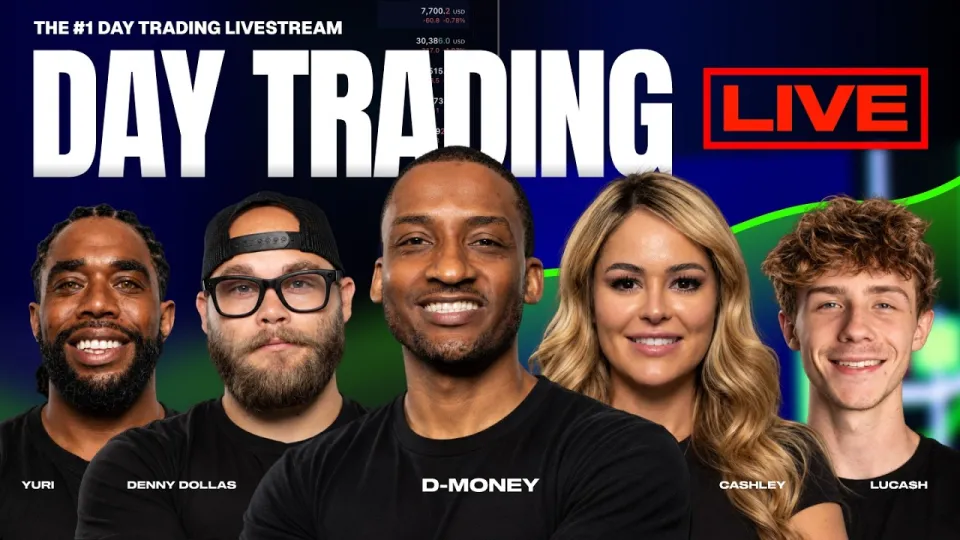
- Patrick Wieland runs the BDH live futures day trading stream with a crew: Damareous Young (DMoney), Lucas Kennard (Lucashhh) and Denny Jones (Denny Dollas).
- The stream is built around prop firm accounts, not personal capital: Apex Trader Funding, Topstep, TakeProfitTrader, Lucid Trading and MyFundedFutures.
- OnlyPropFirms.com ranks prop firms and lists discounts; the current top three listed in the stream description are Lucid Trading, TakeProfitTrader and Apex Trader Funding.
- A two-hour course teaching the strategy traded live on stream is sold for $99.
- Live futures day trading carries substantial risk; affiliate links and prop firm purchases are not financial advice.
Live futures day trading is a format where a trader executes real futures positions on a stream in real time, narrating entries, exits and risk while viewers watch the same order flow — and in 2026 the most-watched version of that format is Patrick Wieland's BDH show, which runs every trading day with a four-person desk and a heavy focus on prop firm accounts rather than personal capital.
What the BDH live futures desk actually is
The BDH is a live trading floor split between South Florida and California that streams futures trading, market analysis, giveaways and prop firm reviews on a daily schedule. The crew is Patrick Wieland (also known as PW or Daddy Warbux), Damareous Young (DMoney), Lucas Kennard (Lucashhh) and Denny Jones (Denny Dollas). The show positions itself as the home of the number one futures day trader on YouTube, and its core content is not pre-recorded lessons but real-time execution during the regular futures session.
Because the format is live, the value is in the process rather than the outcome: how a setup is selected, where the stop goes, how size is adjusted when the idea is wrong, and how a trader behaves after a losing sequence. That is also why the stream leans on prop firm accounts — a funded evaluation account with a hard drawdown rule forces a visible risk framework that a personal cash account often does not.
Why prop firms sit at the center of this trading model
Prop firm trading means a trader pays for an evaluation account, proves profitability under strict rules, and then trades the firm's capital for a profit split. In futures this model became the dominant retail path because intraday margin on index futures is small relative to contract notional, so a $50,000 evaluation account can control exposure that would otherwise require a much larger cash balance.
The stream's description lists a full ranking of firms, and the current top three are Lucid Trading, TakeProfitTrader and Apex Trader Funding, followed by Tradeify, Legends Trading, BluSky Trading, TradeDay and MyFundedFutures. Two things matter more than the brand name when you compare them:
- Drawdown type — end-of-day trailing versus intraday trailing versus static. A trailing drawdown that follows your highest unrealized profit is far harder to pass than a static one.
- Payout mechanics — minimum trading days, consistency rules, and whether the first payout can be requested before a fixed calendar period.
- Contract limits — micros versus minis, and how many contracts you are allowed to hold at the account size you bought.
- Reset and activation cost — the real price of a challenge is the evaluation fee multiplied by the expected number of attempts, not the sticker price.
A ranking page such as OnlyPropFirms.com exists precisely because those terms change often, and because a discount code changes the math on repeated resets.
The questions new viewers ask first
The most common questions from the live chat are not about market direction — they are about the setup itself. Viewers ask which setup is being worked on a given day, and where they can buy the exact strategy being traded on screen. Both questions point to the same gap: a live stream shows execution, but it does not pause to explain the entry logic, so a viewer who joins mid-trade sees a position without the reasoning behind it.
The practical answer is that a live show is a demonstration layer, not a curriculum. If you want to trade the same model, you need the rule set written down before you watch: what instrument, what session, what triggers an entry, what invalidates the idea, and what the maximum loss per trade is. Without those five items defined in advance, watching someone else execute teaches you their clicks, not their decisions.
A second recurring theme is cost. A two-hour course teaching the strategy traded live on the stream is sold for $99, which is a low barrier compared with most trading education, but it is still a purchase that should be judged against your own results on a demo account first.
How to use a live trading stream without copying trades blindly
Copy trading and signal-following are the fastest way to lose money in futures, because the follower almost never has the same entry price, the same account size, or the same drawdown tolerance as the person being copied. A stream is better used as a structure to test your own process against. A workable routine looks like this:
- Watch one full session without trading and write down every entry you would have taken, with a timestamp and a reason.
- Compare your list with what actually happened on the stream. The differences are your blind spots.
- Pick a single instrument — usually one index future and its micro equivalent — and trade only that for a fixed period.
- Define a daily stop in dollars, not in points, and stop when it is hit regardless of how the session looks.
- Log every trade with the reason for entry and exit, then review the log weekly instead of daily.
This is slower than following alerts, but it is the only version that produces data you can act on. Futures trading involves substantial risk, and past performance on a stream does not guarantee anything about your own results.
What a daily live format gives a developing trader
A daily live show creates something a course cannot: a continuous record. Over weeks you see the same trader in trending sessions, in chop, after a stop-out, and on days when nothing sets up. That variety is the actual education, because it shows how a fixed rule set behaves across conditions instead of only in the examples that were chosen for a lesson.
It also exposes the boring parts honestly — waiting, skipping trades, and closing early. Most retail losses come from trading when there is no setup, and a live desk that spends an hour doing nothing is demonstrating that discipline in public. The trade-off is that live content is unstructured: you cannot fast-forward to the part you need, and if you join late you may miss the reasoning behind a position that is already open.
Where the money and the incentives sit
The stream description discloses affiliate links, meaning the channel may earn a commission when viewers sign up for a prop firm through those links. That does not make the reviews false, but it does mean the ranking is a business relationship as well as an opinion, and it should be read that way.
The content is labelled as educational and entertainment only, not financial or investment advice. For anyone evaluating a prop firm purchase, the useful move is to compare the drawdown rules and payout terms directly on the firm's own site rather than relying on any ranking, then start with the smallest account size that still allows the contract count you need.
Final thoughts on trading alongside a live futures desk
Live futures day trading in 2026 is a spectator sport with a real order book behind it, and Patrick Wieland's BDH show is the clearest example of the format: a four-person desk, daily sessions, a prop firm ranking, and a $99 course for the strategy traded on screen. The stream is useful for seeing how risk rules survive contact with a live market, but it is not a substitute for your own written plan, your own trade log, and your own position sizing. Treat the ranking and the affiliate links as commercial context, treat the live execution as a case study, and treat your own account as the only scoreboard that matters. Patrick Wieland is the author of the show this breakdown is based on.
Questions & answers
Which setup is being traded on the live stream?
The stream does not always name the setup in advance, and viewers frequently ask which one is being worked on a given day. The strategy traded live is the same one taught in the paid two-hour course, so the rule set is available separately from the broadcast. Watching without the written rules means you see the execution but not the entry logic.
Where can I buy the exact strategy traded on screen?
There is a two-hour course sold for $99 that covers the strategy used on the stream. Before buying, it is worth testing whether you can follow the rules on a demo account for a few weeks, because the course teaches a process rather than a signal service. The stream itself is free to watch daily.
Is copy trading a live futures stream a good idea?
Generally no. A follower rarely gets the same entry price, account size or drawdown tolerance as the trader being copied, so the risk profile is different even when the direction is the same. Using the stream as a case study to test your own written plan produces usable data; copying entries produces confusion.
What should I check before buying a prop firm evaluation?
Focus on the drawdown type, the payout mechanics and the contract limits, because those three determine whether the account is passable for your style. A trailing drawdown that follows unrealized profit is much harder than a static one. Also count the reset fee, since the true cost is the evaluation price multiplied by the expected number of attempts.
Source: LIVE DayTrading! #1 Watched Futures Trading Show! · Markdown version